
How to Make Your Light Foundation Darker
Adjust the shade, keep the finish.
You guys, I love me some tan. I’ve enjoyed the pool all summer. My apartment facilities were the closest thing I had to a vacation. Now that I have this beautiful golden tan, I was hoping my makeup would look sun-kissed and flawless.
Well, too bad because it appears I have nothing in my cabinet with a shade that would match my current skin tone -not even a proper concealer, so that I can at least create a base makeup and layer bronzer or something. Nada!
So I had to dig deep and get creative. I’ve been trying to find a way to warm up and darken my foundation shade, which is like the snow shade, so that it looks natural.
If you’re in a similar situation, here’s what I’ve tried to make my light foundation darker, and what worked and what didn’t.
1. Mixing with a Dark Concealer
First of all, let me just say that this method has been the most successful. It’s a foolproof way, and this is what I’ve been doing. My foundation is Clinique Even Better Serum Foundation in the shade CN10 Alabaster.
I love this foundation because it literally looks better on my skin as the day goes on. I remembered I had this MAC Studio Fix Concealer Palette in Medium Deep that I didn’t use much. The shades were too dark.
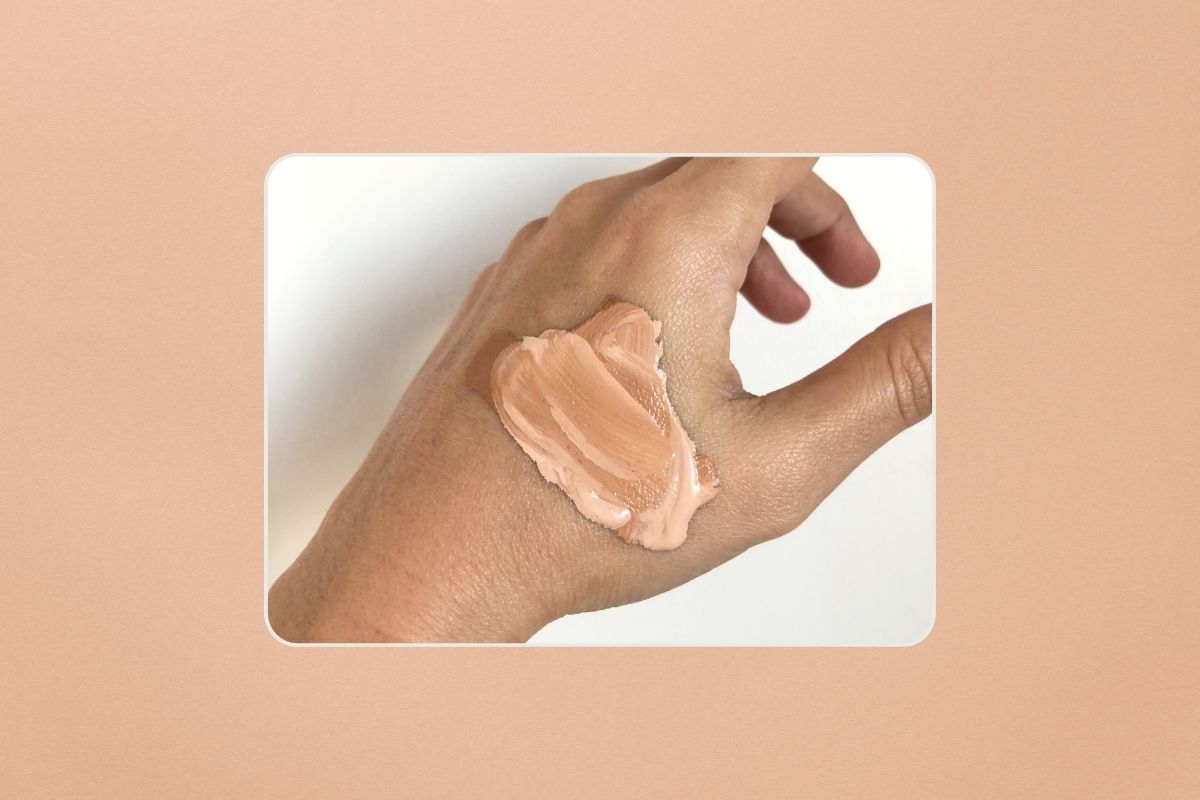
So I used a small brush to dig up a few layers of the cream concealer and put it on the back of my hand. Then I squeezed out a pump of my foundation and mixed the two on the back of my hand until I got a nice consistency and shade. Then I applied it on my face, and there you have it. Perfect shade!
Note that concealers tend to be a bit thicker than foundation. So when you mix the two, you can get a faster drying formula, which can make the blending a bit difficult. But no worries, keep blending. And keep dampening the makeup sponge if you have to.
Additionally, you can do this with concealer, too. If your concealer is too light for your skin, which can make you look like you have dark circles, mix it with a darker concealer.
You can even skip foundation, too, and apply the mix all over your face to do your base makeup. You’ll achieve a more natural-looking makeup.
2. Using Liquid Bronzer
This is the second best method you can try to make your foundation darker. A liquid bronzer has a runny consistency that can easily be blended with a liquid foundation. So that’s a plus. And because it’s a bronzer, the shade is inherently darker.
On the flip side, liquid bronzers tend to be less pigmented, which is why you usually need a bit more product when you’re applying one. That can be a problem.
It’s because that means you need more product to mix with your foundation, and if the consistency of the two doesn’t match well, you won’t be able to achieve the desired texture to apply on your face. But it is definitely worth a shot.
I’ve mixed Clinique Sun-Kissed Face Gelee with my foundation, and as long as I mix in small amounts, it works. It has a gel texture. So, even better if yours is liquid like bronzing drops!
Just like the concealer, put it on the back of your hand and mix until you achieve the desired shade. I wouldn’t recommend applying them on your face because it’s really difficult to blend and mix them that way.
3. Using Contour/Cream Bronzer
This method is something you can combine with the one above to cover your bases or try alone if you don’t have liquid bronzer. But know that this one works especially well if your foundation is light coverage. I’m really happy with the results!
Before moving on to foundation, I swipe my Fenty Match Stix Matte Contour Skinstick on my cheeks, my forehead, and around the jawline.
But I’m not too strict with the placement, so I drag the stick and blend the formula close to the apples of my cheeks. So in essence, I’m darkening my complexion.
Then I apply my light coverage Clinique Even Better Makeup Foundation with the same CN10 shade. And since this is light coverage, it does not neutralize my complexion by covering everything up.
The contour layer that I applied liberally in advance kind of mixes in with the foundation, and I have a beautiful layer with a nice shade that is much closer to my skin tone.
4. Using Powder
This is something I read online when I was looking for ways to make my foundation shade darker. People say you can mix it with a powder bronzer, a dark powder of some kind, or even eyeshadow. Don’t even waste your product. Here’s why it doesn’t work.
From what I’ve tried, no matter what I do, the liquid foundation just doesn’t mix with powder. Loose or compact, it doesn’t matter. It’s because those particles don’t melt.
It turns the shade a bit darker, yes. But I just couldn’t achieve a smooth consistency. So I won’t apply a gritty paste on my face just because it matches my skin tone. Super pass, uber pass!
5. Mixing with Other Base Products
This isn’t something I’ve tried, but it needs to be said. Obviously, if you have a darker shade foundation, you can always mix it with something lighter to achieve a medium shade.
The same goes for other base products, too. You can mix your light foundation with a darker shade of BB creams, CC creams, tinted moisturizers, and skin tints.
I would suggest using very small amounts because there’s always a chance of inconsistent textures. For example, you might be mixing a silicone-based product with a water-based one without knowing. In the end, you might end up with cakey and patchy makeup.
So if you’re going to do this, use no more than what you need to. Don’t go overboard and do your whole face just like you’d apply a regular foundation. Focus on the center of the face, like on the cheeks, to even out the skin tone. The rest of it can be dealt with by using a bronzer.
So this is how you can make your light foundation shade darker. I mean, you can always just buy a new foundation, but those babies aren’t cheap. Again, using a dark concealer has been the best method for me. This is a good reminder to hold on to some of that makeup that seems useless for now, but you never know when it can come in handy. Another reminder, when you’re buying a new foundation, especially in-store, ask for a sample of the same foundation in darker shades. Keep them in your cabinet in case you need to mix and match them later. They help adjust your foundation shade between seasons.
Read Next: Concealer vs. Foundation


